

By – Shubhendra Singh Rajawat
In a significant move, the Modi Cabinet has approved the ‘One Nation, One Election’ (ONOE) Bill, paving the way for synchronized elections across India. The decision marks a major step towards implementing simultaneous elections for the Lok Sabha and state legislative assemblies. The bill is likely to be presented during the ongoing Winter Session of Parliament.
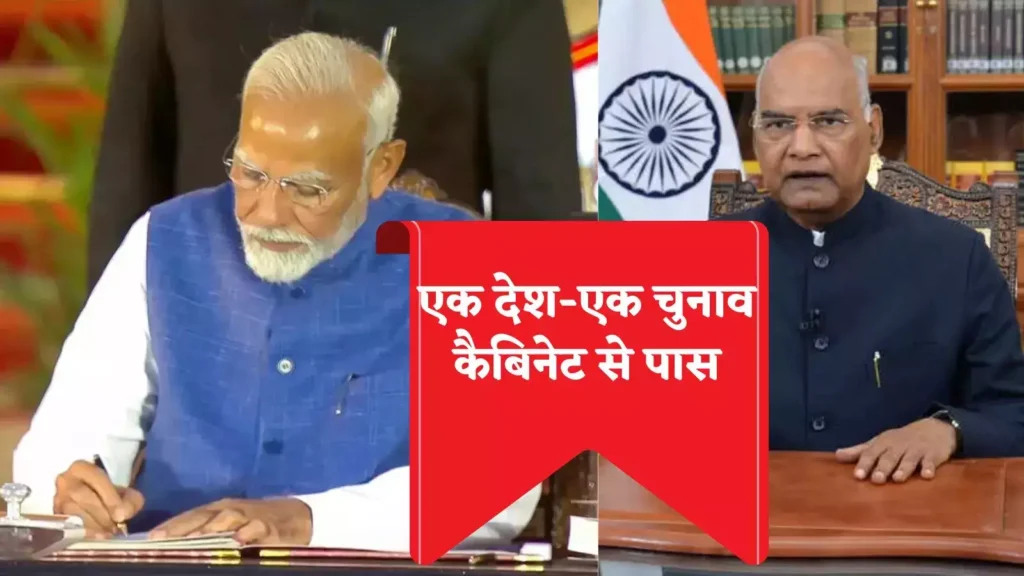
This landmark decision follows the approval of the Kovind Committee’s report by the Union Cabinet on September 18. The high-level committee, chaired by former President Ram Nath Kovind, extensively deliberated on the feasibility and framework of the ONOE system.

A Vision Rooted in Unity
Prime Minister Narendra Modi first proposed the idea of ‘One Nation, One Election’ during his Independence Day speech in 2019. Advocating for the concept, Modi emphasized that continuous integration of governance processes is essential for the nation’s progress. He revisited the concept during his 2024 Independence Day address, reinforcing his commitment to the idea.

The Current Election System
India’s existing system schedules Lok Sabha elections every five years, while state assembly elections occur based on the respective term completions of individual states. This leads to frequent elections across the country, disrupting administrative continuity and increasing costs.
Currently, some states like Andhra Pradesh, Arunachal Pradesh, Odisha, and Sikkim already hold their assembly elections simultaneously with Lok Sabha elections. However, in most states, assembly elections occur separately due to varying term completions.
Why the Debate on One Nation, One Election?
The discussion on simultaneous elections gained momentum in 2018 after the Law Commission’s draft report highlighted the financial and administrative strain caused by staggered elections. According to the report, conducting Lok Sabha and assembly elections together could significantly reduce expenses.
The report pointed out that the synchronized election process in India was disrupted after 1967 due to factors like political instability and the imposition of President’s Rule in certain states under Article 356 of the Constitution. The Law Commission noted that a strong multi-party system and coalition governments further contributed to the divergence in election timelines.
Key Recommendations of the Kovind Committee
The Kovind Committee has proposed implementing the ONOE framework in two phases:
- Phase One: Conducting Lok Sabha and state legislative assembly elections simultaneously.
- Phase Two: Holding local body elections (panchayats and municipalities) within 100 days of the general elections.
To ensure smooth execution, the following steps have been suggested:
- Preparation of a unified voter list for all elections.
- Establishment of a task force to oversee implementation.
- Countrywide consultations with political parties, experts, and stakeholders.
Historical Precedents and Recommendations
The practice of simultaneous elections was prevalent in India from 1951 to 1967. Subsequent disruptions led to a fragmented election schedule. Key reports advocating for ONOE include:
- 1999 Law Commission’s 170th Report: Recommended a synchronized election cycle every five years.
- 2015 Parliamentary Standing Committee’s 79th Report: Suggested a phased implementation approach.
The Kovind Committee report highlights substantial support for the ONOE framework among stakeholders, citing economic benefits, improved governance, and reduced voter fatigue as key advantages.
The Road Ahead
The ONOE initiative reflects the government’s commitment to streamlining electoral processes, reducing costs, and ensuring administrative efficiency. As the bill heads to Parliament, extensive deliberations and consultations are expected to address potential challenges, including political consensus and constitutional amendments.
Уникальные возможности для покупки серверов HP
сервер hp купить http://www.kupit-server-hp.ru/ .